
Introduction
Teeth grinding, also called bruxism, happens when you clench or grind your teeth. Many people do this at night, often without knowing. According to the American Dental Association, about 10% of adults and up to 15% of children grind their teeth. Over time, this habit can cause serious dental problems. However, mouthguards offer a simple way to protect your teeth. In this blog, you will learn how mouthguards help with bruxism and why they matter.
Symptoms of Teeth Grinding
At first, teeth grinding may go unnoticed. Yet, certain signs can point to the problem. For example, you might notice:
Sometimes, you may also hear clicking sounds in your jaw. If you notice these symptoms, a dentist can help confirm if you have bruxism.
Causes and Risk Factors
Teeth grinding can happen for many reasons. Often, stress or anxiety plays a big role. In addition, other risk factors include:
Because these factors can overlap, it is important to talk with your dentist about your habits and health.
Health Risks and Complications of Untreated Teeth Grinding
Without treatment, teeth grinding can cause lasting harm. For instance, you may develop:
Over time, these issues can affect your ability to chew and speak. According to the CDC, untreated dental problems may also impact your overall health.
How Mouthguards Work to Prevent Damage
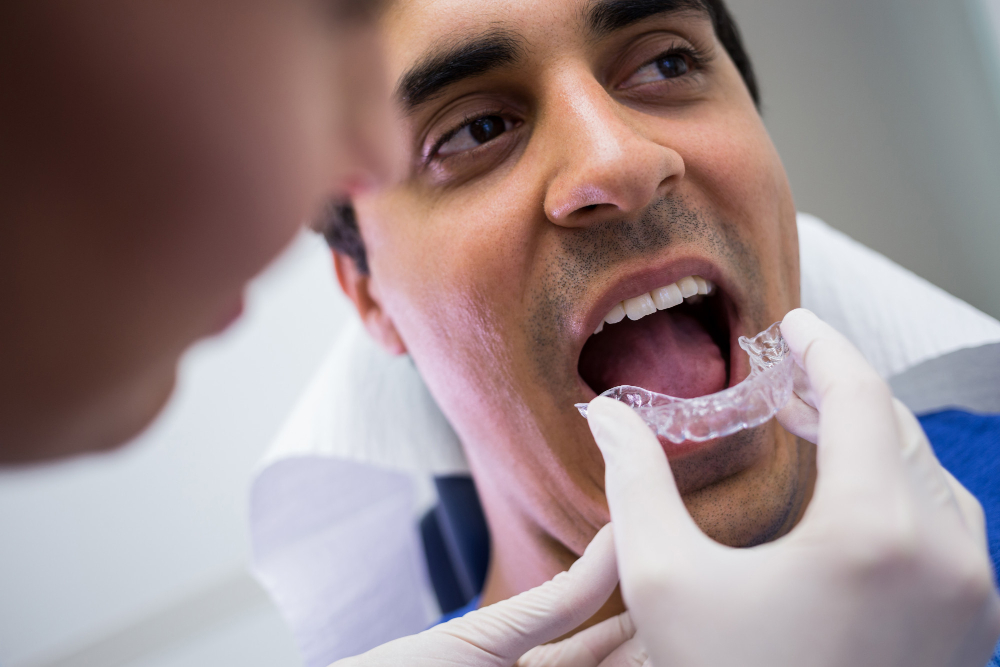
Mouthguards, also known as night guards for teeth grinding, act as a barrier between your upper and lower teeth. When you wear a bruxism mouthguard, it absorbs the pressure from grinding. As a result, your teeth and jaw joints stay protected. In addition, mouthguards can help reduce jaw pain and morning headaches. Dentists often recommend them as a first step to manage bruxism at home.
Types of Mouthguards for Teeth Grinding
There are several types of mouthguards available. Each type offers different benefits:
Because comfort and fit matter, many people prefer custom or boil-and-bite options for nightly use.
How to Choose and Use a Mouthguard
Choosing the right mouthguard depends on your needs and budget. For example, if you have severe teeth grinding, a dentist-made mouthguard may be best. On the other hand, mild cases may do well with a boil-and-bite guard. When selecting a mouthguard, consider:
Once you have your mouthguard, wear it every night as directed. Always follow your dentist’s instructions for the best results.
Tips for Caring for Your Mouthguard
Proper care keeps your mouthguard clean and long-lasting. For best results, try these tips:
Additionally, bring your mouthguard to dental visits so your dentist can check its fit and condition.
Prevention and Lifestyle Guidance
Besides using a night guard for teeth grinding, you can take steps to lower your risk. For instance, you can:
With these habits and a bruxism mouthguard, you can help protect your teeth and improve your sleep.